Understanding Modern Technology Stacks
A technical overview of common technologies and architectural patterns used in modern enterprise applications, organized by functional layers.
About This Guide
Modern enterprise applications typically involve multiple technology layers working together. This guide provides an overview of common technologies and patterns we've encountered in our work.
Note: Technology choices depend heavily on specific requirements, team expertise, and business constraints. This is meant as a reference, not a prescription. Every project has unique needs.
Technology Stack Overview
Common Layers in Modern Applications
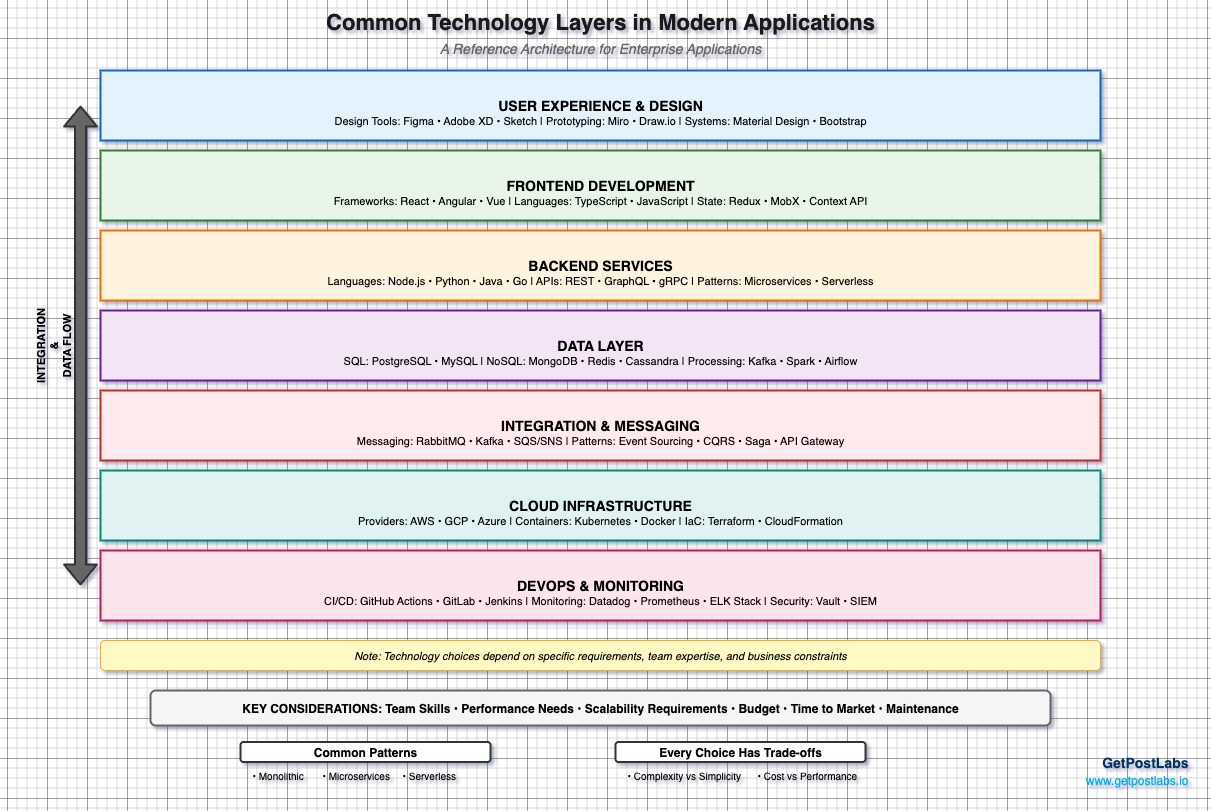
Enterprise applications typically organize technologies into functional layers, each handling specific responsibilities. Understanding these layers helps in making informed architectural decisions.
Common Technology Layers
UX/UI Design & Prototyping
The design layer focuses on user experience and interface design, transforming requirements into visual and interactive elements.
Design Tools
- • Figma / FigJam
- • Adobe XD
- • Sketch
- • InVision
Prototyping
- • Draw.io / Miro
- • Balsamiq
- • Marvel App
- • Principle
Design Systems
- • Material Design
- • Human Interface Guidelines
- • Ant Design
- • Bootstrap
Frontend Development
Frontend technologies create the user-facing portions of applications, handling presentation logic and user interactions.
Core Technologies
- • HTML5 / CSS3
- • JavaScript
- • TypeScript
- • WebAssembly
Frameworks
- • React / Next.js
- • Angular
- • Vue.js / Nuxt
- • Svelte
State Management
- • Redux / Zustand
- • MobX
- • Context API
- • Recoil
Backend Development & APIs
Backend services handle business logic, data processing, and integration with various systems and databases.
Languages
- • Node.js
- • Python
- • Java / Spring
- • Go
- • C# / .NET
- • Ruby
API Patterns
- • RESTful APIs
- • GraphQL
- • gRPC
- • WebSockets
- • Server-Sent Events
Architectures
- • Microservices
- • Serverless
- • Event-Driven
- • Domain-Driven Design
- • Hexagonal Architecture
Data Storage & Processing
Data layer technologies handle storage, retrieval, and processing of application data at various scales.
Relational Databases
- • PostgreSQL
- • MySQL / MariaDB
- • Oracle
- • SQL Server
NoSQL Options
- • MongoDB
- • Cassandra
- • DynamoDB
- • Redis
- • Elasticsearch
Data Processing
- • Apache Kafka
- • Apache Spark
- • Apache Airflow
- • ETL/ELT Tools
Integration & Messaging
Integration technologies enable communication between different services and systems, both internal and external.
Message Brokers
- • RabbitMQ
- • Apache Kafka
- • AWS SQS/SNS
- • Azure Service Bus
- • Redis Pub/Sub
Integration Patterns
- • Event Sourcing
- • CQRS
- • Saga Pattern
- • Circuit Breaker
- • API Gateway
Cloud & Infrastructure
Cloud platforms provide the underlying infrastructure for deploying and scaling applications.
Cloud Providers
- • Amazon Web Services
- • Google Cloud Platform
- • Microsoft Azure
- • Digital Ocean
Container Orchestration
- • Kubernetes
- • Docker Swarm
- • Amazon ECS
- • HashiCorp Nomad
Infrastructure as Code
- • Terraform
- • AWS CloudFormation
- • Pulumi
- • Ansible
DevOps & Monitoring
DevOps tools and practices enable continuous integration, deployment, and monitoring of applications.
CI/CD Tools
- • GitHub Actions
- • GitLab CI
- • Jenkins
- • CircleCI
- • TeamCity
Monitoring
- • Datadog
- • New Relic
- • Prometheus / Grafana
- • ELK Stack
- • Sentry
Container Tools
- • Docker
- • Container Registries
- • Helm
- • Istio Service Mesh
Choosing the Right Technologies
Technology selection should be driven by specific project needs rather than trends. Consider these factors when making decisions:
Technical Factors
- • Performance requirements
- • Scalability needs
- • Security considerations
- • Integration requirements
- • Data consistency needs
Business Factors
- • Team expertise
- • Time to market
- • Budget constraints
- • Maintenance costs
- • Vendor lock-in concerns
Common Architecture Patterns
Monolithic Architecture
Single deployable unit containing all functionality.
Good for: Small teams, simple applications, rapid prototyping
Challenges: Scaling specific features, technology lock-in
Microservices Architecture
Application split into small, independent services.
Good for: Large teams, complex domains, independent scaling
Challenges: Operational complexity, network latency
Serverless Architecture
Functions as a service, no server management.
Good for: Variable workloads, event-driven processing
Challenges: Vendor lock-in, cold starts, debugging
Key Considerations
For Development Teams
- 1. Choose technologies your team can effectively support
- 2. Consider the long-term maintenance implications
- 3. Balance innovation with proven solutions
- 4. Document architectural decisions and rationale
For Business Leaders
- 1. Technology choices impact hiring and training costs
- 2. Popular technologies often have better community support
- 3. Consider total cost of ownership, not just initial development
- 4. Ensure alignment between technology and business strategy
The best technology stack is one that fits your specific needs, team capabilities, and business constraints. There's no universal solution—only appropriate choices for particular contexts.
Technology stacks continue to evolve rapidly. What matters most is understanding the principles behind these technologies and how they work together to solve business problems.